
AI-augmented Forensic Anthropology For Reconstructing Unidentified Remains
Working in forensic anthropology, I’ve seen firsthand how challenging it can be to identify unknown human remains. Matching fragments or incomplete skeletons to missing persons is slow and complex. Over the last few years, artificial intelligence (AI) has started to change this process. AI-augmented forensic anthropology now allows me to tackle difficult cases with greater confidence, precision, and speed. Through this article, I’ll lay out how AI is transforming how I reconstruct and identify unidentified remains, the tools and steps involved, and some key things you should know if you’rej curious about this growing field.
How AI Is Making a Difference in Forensic Anthropology
Forensic anthropology once relied almost entirely on manual measurements, expert judgement, and visual comparisons to assess unidentified remains. While these methods required deep skill and years of experience, they sometimes left gaps, especially when dealing with damaged or incomplete skeletons. With AI now part of my work, analyzing skeletal remains has grown faster, more reliable, and more consistent.
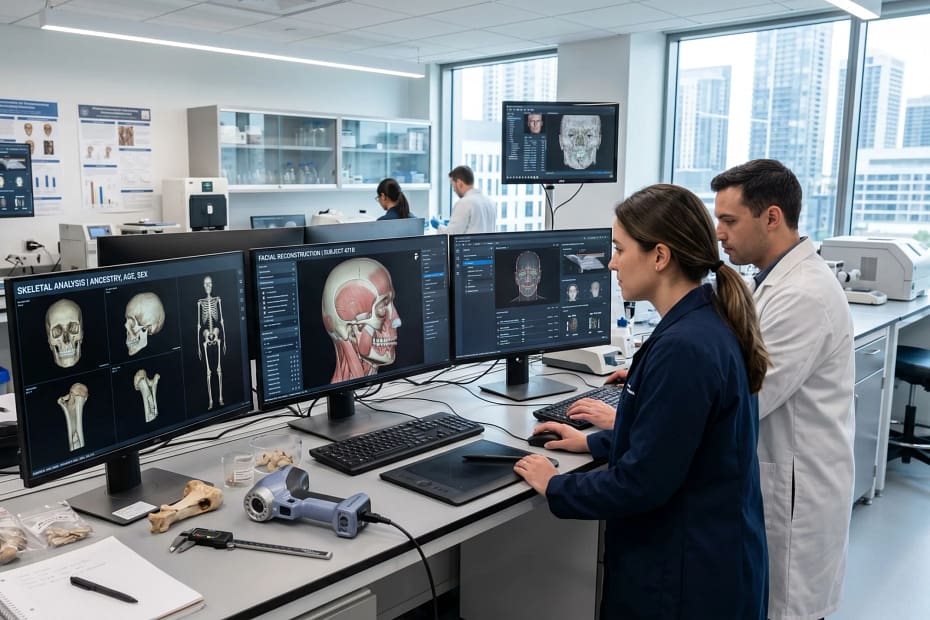
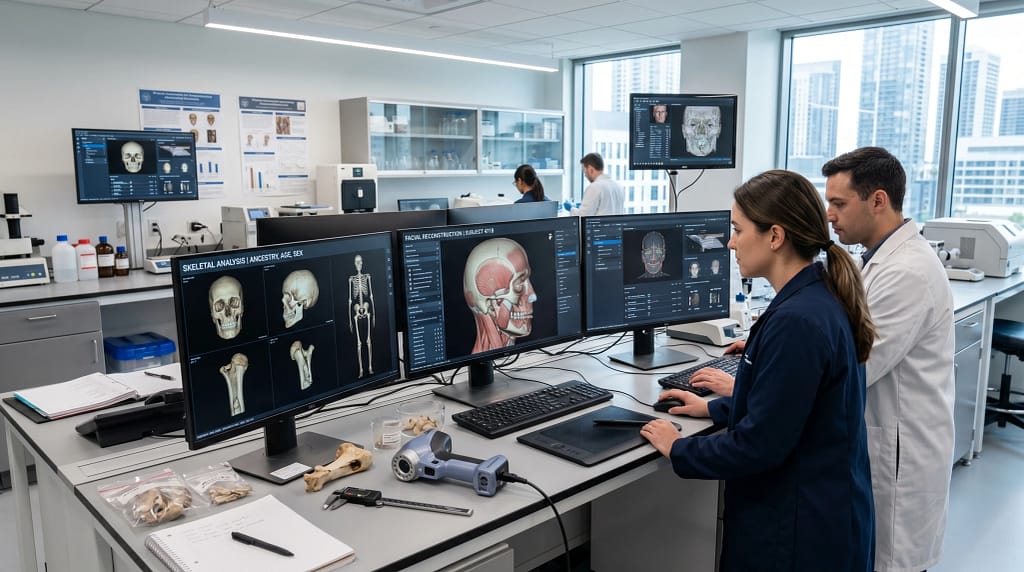
AI tools are particularly effective for digital analysis of bones. Advanced computer vision and deep learning systems help me sort, catalog, and compare bone fragments. In facial reconstruction, machine learning accelerates creating lifelike, data-backed facial approximations by drawing on huge medical and photographic image databases. By automating repetitive or error-prone steps, such as shape classification and ancestry estimation, AI lets me focus more on the nuances and context of each case.
In some countries, AI-powered systems are even connected to national or international missing persons databases, greatly improving the chances that my digital reconstructions will match a living identity on record. Ultimately, I’ve found that AI doesn’t replace expert judgement, but rather boosts what my colleagues and I can accomplish with limited physical clues.
Step By Step: The AI-Augmented Forensic Anthropology Workflow
Combining AI technology with my traditional forensic anthropology training creates a workflow that is both thorough and efficient. Here’s how the process generally works when I receive a case involving unidentified remains:
- 1. Initial Assessment: I start with careful documentation and preservation of all remains, using 3D scanning to create detailed digital replicas of bones and fragments.
- 2. Digital Reconstruction: AI software analyzes the scans to suggest which bones may fit together, estimate missing elements, and flag unusual features for my review.
- 3. Biological Profile Estimation: Algorithms estimate the individual’s age, sex, ancestry, and height by comparing digital bone models to vast datasets of known populations.
- 4. Facial Approximation: Using machine learning, AI generates potential facial reconstructions, relying on skull shape and statistical models of tissue thickness.
- 5. Database Matching: AI cross-references the digital data and facial images against missing persons registries or DNA databases, suggesting candidates for manual verification.
This step by step workflow not only saves time but often reveals connections that traditional methods might overlook, such as similarities between remains found decades apart, or nonobvious matches to missing persons previously excluded by less precise analyses.
How AI-Powered Tools and Terms Fit In
When I first began using AI in forensic anthropology, a few concepts and tools stood out as especially helpful for beginners and experts alike. Understanding these helps me explain my work to colleagues from other fields and families awaiting identification:
- 3D Scanning and Modeling: I use structured light or CT scans to create highresolution digital bone models for assessment and reconstruction.
- Machine Learning Algorithms: These programs study thousands of skeletal examples to help me estimate characteristics like age or ancestry more objectively.
- Facial Reconstruction Software: This combines statistical shape models with photographic reference points to create digital faces from skulls.
- Automated Database Search: AI scans both biometric and textual data in official registries for matches or close leads, making what would take days by hand possible in minutes.
I always keep in mind that these tools are only as reliable as the data they’re trained on. That’s why I monitor accuracy and doublecheck AI results with traditional methods, especially in legal or highstakes cases.
My Quick Guide to Tackling Cases with AI-Augmented Forensic Anthropology
Getting started with AI in this field doesn’t have to be complicated. Here’s how I usually approach new cases or train colleagues new to these tools:
- Choose the Right Technology: Select userfriendly scanning and AI software with support and documentation.
- Document Everything Digitally: Digitize bones and findings early, ensuring no detail is lost, even if the original evidence becomes unavailable later on.
- Check Local Policies and Laws: Review the legal guidelines for digital reconstructions and biometric data use, especially around privacy.
- Start with Small Batches: Run small test cases through the AI before tackling more complex skeletons, to ensure the process runs smoothly and accurately.
- Review and Collaborate: Compare AI findings with expert opinions, medical records, and case notes, and share results with trusted colleagues for feedback.
This approach helps me avoid rushing, catch errors early, and build up a personal workflow that combines both my clinical experience and the benefits of automation.
Challenges to Watch Out For When Using AI in Forensic Anthropology
AI has made a huge difference in my day to day work, but it’s not without hurdles. Here are some barriers I deal with regularly, with personal notes on how I address them:
- Data Quality: Poorly scanned bones or incomplete datasets can give inaccurate results. I always retest scans and doublecheck with manual checks.
- Algorithm Bias: AI trained mostly on one population can skew results. I try to use diverse reference sets and doublecheck outliers by hand.
- Technical Challenges: Hardware failures, software bugs, or outdated databases can create confusion. I keep software updated and work closely with IT staff to maintain reliability.
- Privacy and Ethics: Using biometric data comes with concerns about consent and data protection. I anonymize data and follow institutional review procedures every step of the way.
Data Quality
If a bone fragment scan is blurry or incomplete, the AI may suggest a shape that doesn’t exist in reality. I always create multiple scans under different lighting conditions and crossreference those with photographs. This gives me more material to check if the first round of AI results looks off.
Algorithm Bias
AI can sometimes make poor predictions if it’s been trained mainly on bone data from one group or geographical region. For example, if the training dataset is mostly from European remains, the AI might misestimate ancestry for someone from Asia or Africa. I pay close attention to these possible sources of error, especially in cases involving global populations.
Technical Challenges
Good communication with technical teams really helps. If the 3D software crashes or the AI produces inconsistent results, I report bugs quickly and work with the developers until issues get fixed. Building a backup workflow for critical steps allows me to keep cases on track even when technology has hiccups.
Privacy and Ethics
I anonymize data by removing identifying details before uploading scans to cloud systems or AI platforms. I also document every decision made so I can explain my process to families, legal teams, or oversight committees. Transparency is super important for keeping all stakeholders confident in my work.
Staying aware of these potential barriers makes me a more reliable and adaptable forensic anthropologist. Knowing where technology helps, and where it may mislead, lets me deliver clear, trustworthy results for every case.
Real World Applications: How AI-Augmented Forensic Anthropology Solves Problems
AI-powered forensic anthropology is proving useful in many scenarios. Here are a few places where I’ve seen big improvements:
- Disaster Victim Identification: In mass casualty situations, AI sorts, matches, and helps reconstruct remains rapidly, providing closure to families more quickly.
- Long Unidentified Remains: Historical cases, such as decades old missing person files, benefit from AI’s ability to analyze and cross-reference new and old data efficiently.
- Global Migration Cases: Forensic teams working on multinational or border incidents use AI to scan databases worldwide, improving the odds of finding a match.
By bringing together imaging, facial reconstruction, and datamatching tools, AI helps close cases that had previously hit a dead end. That means more families can receive answers after years of waiting.
Frequently Asked Questions
Here are some common questions people ask me about using AI in forensic anthropology:
Question: Does AI replace the need for a human forensic anthropologist?
Answer: AI streamlines specific tasks, but expert review and final decisions are always necessary. Technology provides a helpful tool, not a substitute for experience.
Question: How accurate is AI at reconstructing faces or profiles from bones?
Answer: Accuracy depends on scan quality and the diversity of the AI’s training datasets. I always confirm AI results with other lines of evidence.
Question: Are there privacy risks with AI-based forensic anthropology?
Answer: Handling biometric data involves careful consideration. I always follow best practices for anonymization and secure storage to protect personal information.
What I’ve Learned Using AI in Forensic Anthropology
Adding AI to my forensic anthropology toolkit hasn’t just sped up casework, it’s made my work more reliable and provided hope for solving even the toughest cases. Staying up to date with technology and working alongside a multidisciplinary team keeps my contributions valuable. As AI tools continue to grow, so does my ability to bring answers to those who need them most.
The progress in AI-augmented forensic anthropology makes me excited about the future of how we solve mysteries, reunite families, and deliver justice when it matters most. To keep building on this foundation, I often participate in workshops, connect with statisticians and software engineers, and share feedback with developers to ensure improvements align with real world needs. By blending human insight and AI power, this field is set up to solve ever more difficult cases and bring comfort to loved ones seeking answers.
Thank you for questions, shares and comments!
Share your thoughts or questions in the comments below!
Website enhanced with Royal Addons & Neve 3 theme by themeisle. Website hosted on WA, with AI tools like niche & keyword search. Article written with help of chatGPT and Picsart.
Human touch by Samburu & Fleeky


