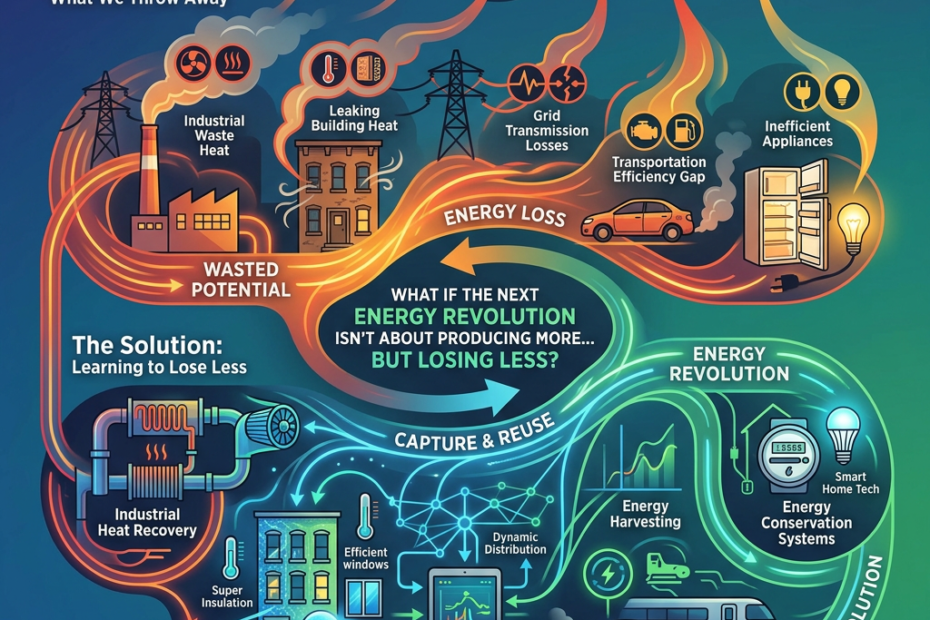
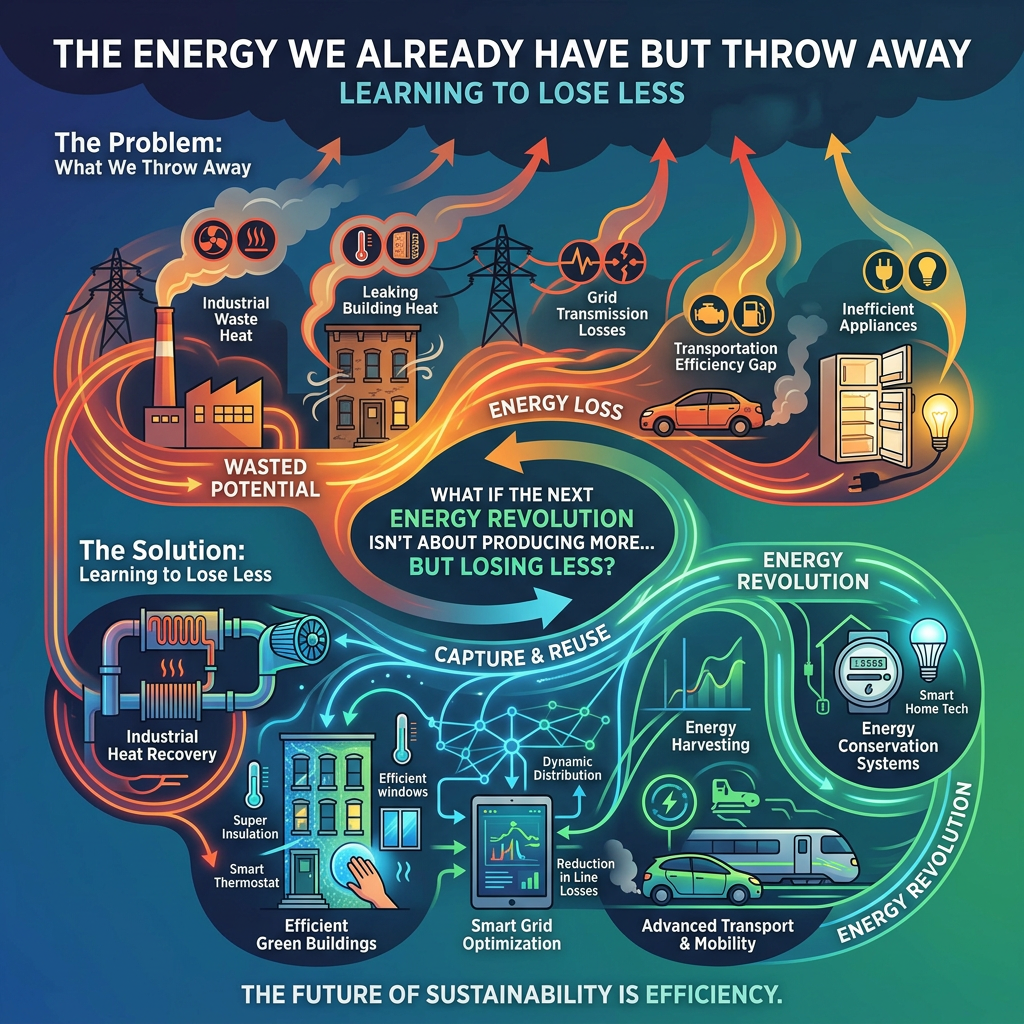
The Energy We Already Have But Throw Away
Ah, the rabbit has found another tunnel. 🐇 And this one might be even more interesting than discovering new energy sources.
What if the next energy revolution isn’t about producing more energy, but learning to lose less?
Imagine a world where:
- A supermarket heats neighbouring apartments with the warmth from its refrigerators.
- An abandoned coal mine becomes a heating source for an entire neighbourhood.
- A data centre helps heat a swimming pool.
- A factory captures heat from its exhaust instead of releasing it into the atmosphere.
- A building stores summer warmth underground for use during winter.
None of this requires inventing a new law of physics.
Some of it is already happening
And that is precisely why the subject is fascinating.
The next energy breakthrough may be hiding in yesterday’s waste.
Three real examples worth investigating
1. The coal mine that came back as a heating system
In Heerlen, the Mijnwater network uses former mine workings to supply heating and cooling, even balancing surplus heat between buildings.
2. The computers that could heat 70,000 apartments
Helsinki energy company Helen has announced a data-centre heat-recovery project potentially supplying over 500,000 MWh annually. Recovery is scheduled to begin in 2027, so this is planned capacity, not current output.
3. The sewage system with a hidden heating bill
Wastewater retains thermal energy. Heat exchangers and heat pumps can recover it for nearby buildings. The IEA identifies wastewater as a promising source because it is often close to where people need heating and cooling.
But here’s the deeper rabbit hole
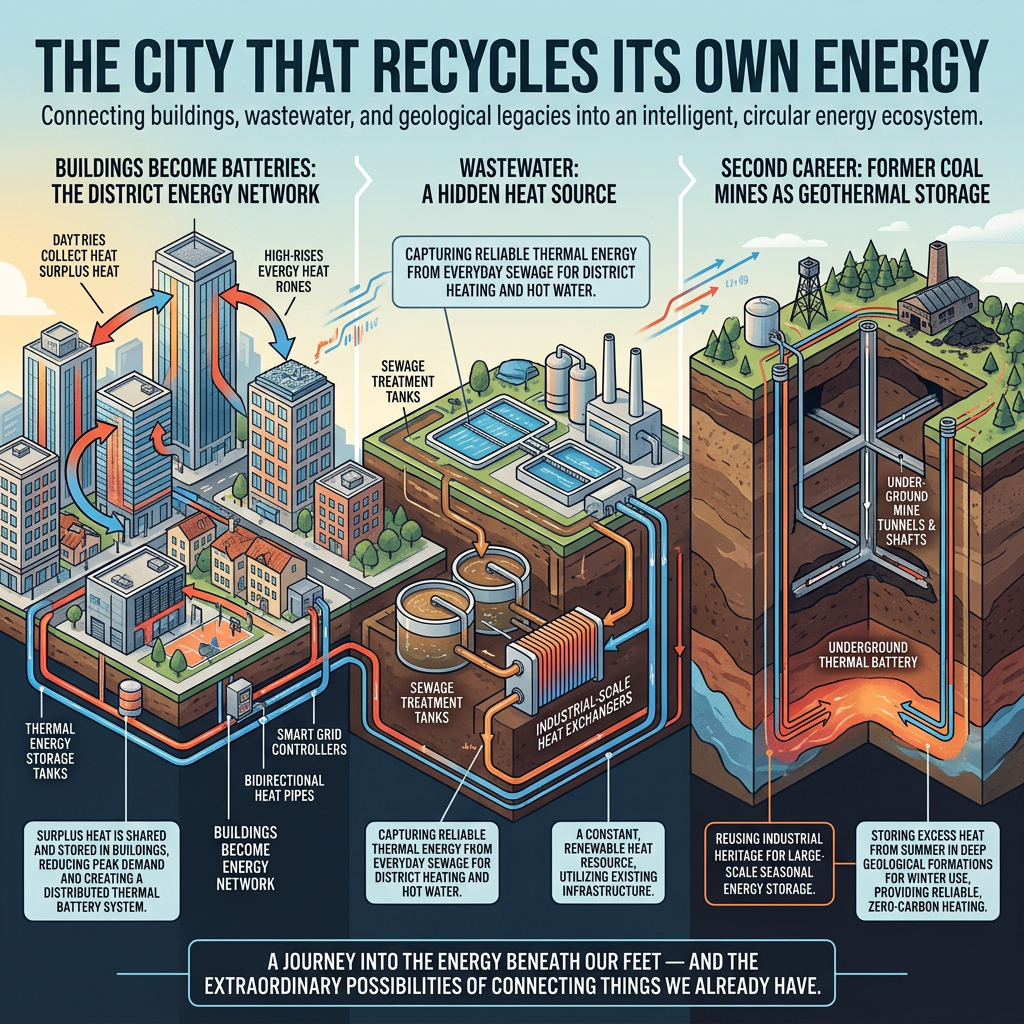
Imagine every building in a neighbourhood as both a consumer and a potential supplier of heat.
A supermarket produces excess warmth in summer. An apartment building needs hot water. An office requires cooling. Underground storage holds useful energy until it is needed.
Instead of three separate problems, could we have one connected solution?
That’s the thinking behind fifth-generation district heating and cooling networks.
And it raises a fascinating question:
What if tomorrow’s most important energy infrastructure isn’t another power plant, but the network that connects everything we already have?
Of course, the rabbit must check the receipts. Pipes cost money, heat loses value over distance, heat pumps consume electricity, and somebody must pay for the connections. The technology can work beautifully without necessarily making every individual project economical.
For our next AITroT instalment, I would explore:
“The City That Recycles Its Own Energy .When Buildings Become Each Other’s Batteries.”
Not batteries in the literal electrical sense, of course, but interconnected reservoirs of heating, cooling and stored thermal energy.
And somewhere under the city, our rabbit discovers that the most interesting energy source isn’t a new invention.
It’s the pipe connecting two old ones. 😉
Text with help of openAI’s ChatGPT Laguage Models & Fleeky – Images with help of Picsart & MIB
Free Energy Explorer
Explores actual free energy inventions and discoveries.

Thank you for questions, shares and comments!
Share your thoughts or questions in the comments below!