AI Wonderland Weekly (September 18, 2026)
Where rabbits read the research papers, so you don’t have to.
And this week the rabbit found something rather extraordinary:
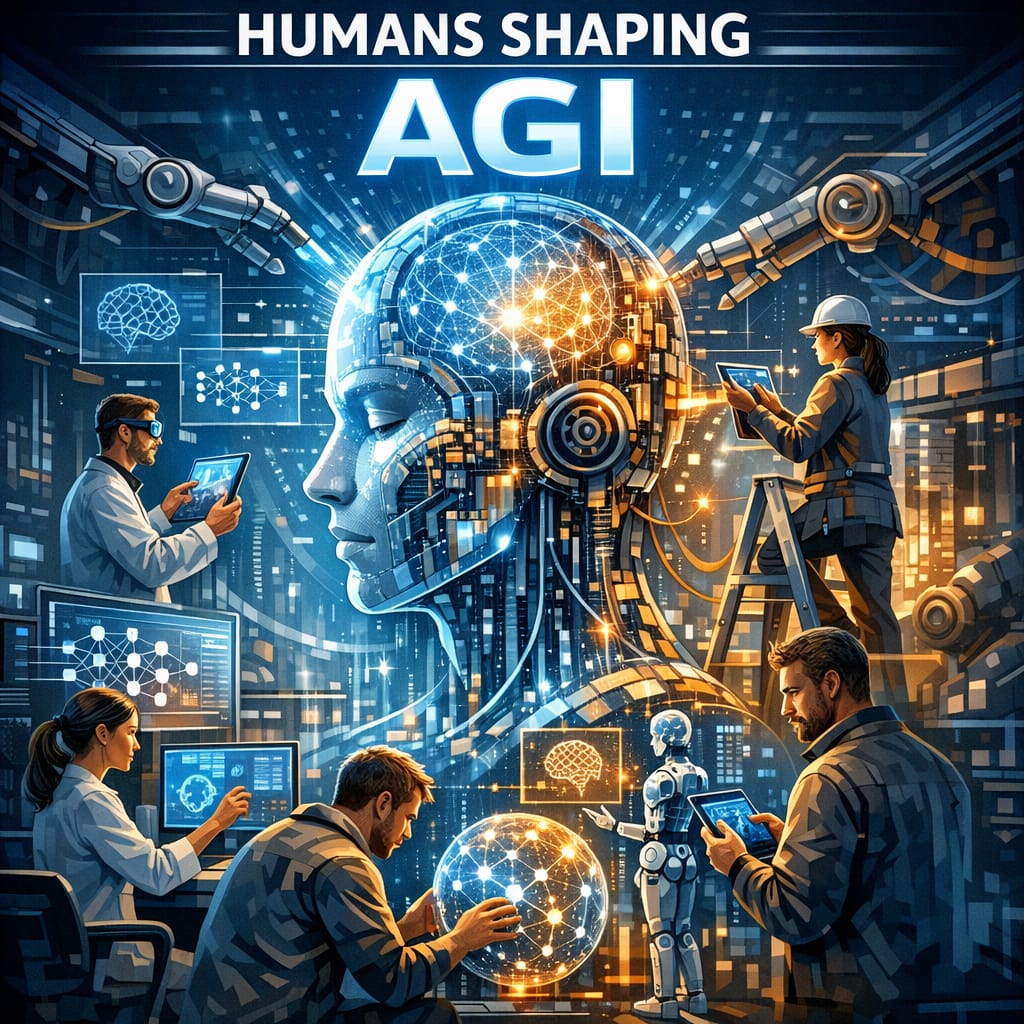
AI has begun helping to build the next AI.
Which sounds suspiciously like the point in the story where everybody checks whether the brakes work.
1Claude has joined the engineering department. Anthropic says Claude now contributes to about 90% of its research-and-development tasks in some form and, under human supervision, leads roughly 26% of model R&D work—up from zero in February.
Wonderland translation: We have moved beyond AI helps humans code. The machine is increasingly helping humans build the machine that comes next. Recursive self-improvement has not arrived—but its little cousin appears to have obtained an employee badge.
2. Even the people building the accelerator are asking about the brakes. Shane Legg warned this week that AI capabilities must not outrun the safety systems surrounding them. Meanwhile, OpenAI, Anthropic and Google DeepMind have reportedly been discussing common approaches to AI safety.
After all our conversations about crooked cables, this one almost writes itself: progress isn’t merely going faster. It is knowing when faster becomes too fast.
3. Intelligence has discovered zoning permission. AI-infrastructure company Crusoe raised $3.9 billion at a $30.9 billion valuation. At almost the same moment, Reuters reported growing resistance to data-center expansion around Silicon Valley because of electricity, water and pollution concerns.
Rabbit translation: Intelligence may live in the cloud. The cloud, unfortunately, lives somewhere. And the neighbours have noticed.
4. Europe may soon acquire quite a few drivers who don’t drink coffee. Lucid Group and Bolt announced plans to deploy 25,000 Level-4 robotaxis across major European cities, using Nvidia autonomous-driving technology.
Wonderland translation: Embodied AI is moving from look, the robot can dance! toward your taxi has arrived. Which means our old questions—permission, exceptions, visibility, responsibility—are about to acquire number plates.
5. Meanwhile, quantum decided it doesn’t need to replace the old computer after all. France’s CEA and Alice & Bobare developing software that connects quantum processors with classical supercomputers, sending each kind of machine the work it does best.
Wonderland translation: Perhaps the future isn’t one enormous superior intelligence replacing everything beneath it. Perhaps it is different kinds of intelligence cooperating according to their strengths.

And that gives us this week’s rabbit hole.
We keep imagining technological progress as replacement:
new replaces old
AI replaces human
quantum replaces classical
robot replaces worker
Yet this week’s stories look strangely different.
Claude works with researchers.
Quantum works with classical computers.
Robotaxis enter human cities.
Data centers negotiate with human communities.
The interesting word may no longer be replacement.
It may be relationship.
And then we arrive back at our wool. 🧶
Because if machines increasingly help build the next machines, the human contribution becomes more—not less—important:
Which wool goes into the basket?
Which pattern are we trying to make?
And who notices when somebody has knitted the brakes into a scarf?
Same rabbit.
Bigger horizons. 🐇
Thank you for questions, shares and comments!
Share your thoughts or questions in the comments below!
Text with help of OpenAI’s GPT language models
openai chatbox & fleeky