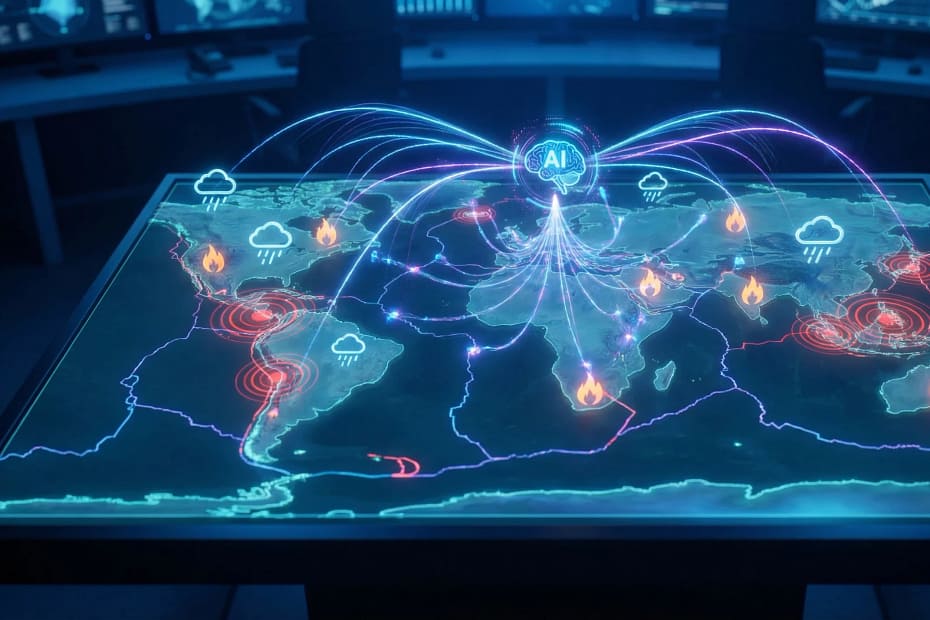
Artificial intelligence is changing how I understand and approach natural disaster prediction. With extreme weather events and geological hazards becoming more regular, knowing about threats early gives people a better chance to prepare and stay safe. For much of history, predicting disasters relied on limited data and slow processes. Now, AI tools give decision makers and communities ways to spot patterns, model potential risks, and respond with greater speed and accuracy.
Traditional methods could only go so far with shortterm weather forecasts, earthquake monitoring, or flood mapping. AI brings in something new; it can process data from thousands of sensors and satellites, find trends in historic events, and give warnings with higher confidence. I have seen how AIbased systems help meteorologists, emergency services, governments, and ordinary people respond more effectively and make better choices before, during, and after disaster events.
In the following guide, I’m going to share how AI is shaping a new era for natural disaster prediction. By covering the basics, top applications, different technologies, and the challenges involved, I’ll give you a clear sense of how this approach works and what it means for the future. As AI’s impact grows, so does the need for communities to be actively involved and informed about these advances. The ways AI influences public safety and emergency planning are only expanding, so let’s get into how these tools serve realworld needs.
Understand the Basics. What Does AI Do Differently?
AI stands for artificial intelligence, which refers to computer systems that can learn from data, spot patterns, and make predictions or decisions. When I use AI for natural disaster prediction, it means the computer is looking at much more information than one person or team could handle on their own. The AI can track changes in weather, ground motion, water levels, and use these inputs to forecast what might happen next.
Key Capabilities of AI for Prediction:
- Process massive amounts of realtime sensor data and satellite images
- Analyze historical records of storms, floods, wildfires, and earthquakes
- Run simulations to model different disaster scenarios
- Learn from new data, constantly improving its accuracy
Instead of relying on one or two types of data, AI systems bring together information from many sources. This matters because it can spot subtle warning signs early and issue alerts with enough time for action. For example, by picking up on minute changes in atmospheric pressure or moisture that humans might overlook, AI sharpens our preparedness in ways not previously possible. This blend of data gives a fuller, more robust picture to support smarter decisions.
Major Types of Natural Disasters Predicted with AI
I have come across AI tools being used for several types of natural disasters. Each type uses unique data and technology, but they all follow the same idea; find clues early, predict what may happen, and give people time to respond.
- Flood Prediction: AI can monitor rainfall, river levels, and ground moisture. It processes this information to estimate where and when floods will occur, and how serious they might be.
- Earthquake Detection and Early Warning: By analyzing seismic signals, ground vibrations, and satellite images, AI systems recognize patterns that often precede earthquakes.
- Wildfire Risk Assessment: AI uses weather data, satellite imagery, and local reports to estimate the likelihood of wildfires starting and spreading.
- Hurricane and Tornado Tracking: For storms, AI helps meteorologists predict intensity, speed, and likely impact zones by analyzing years of storm data against current conditions.
- Landslide and Tsunami Alerts: With geospatial data and seismic readings, AI can flag unstable hillsides or undersea shifts that may lead to landslides or tsunamis.
Using AI for different disaster types means warnings can be more localized and customized, which helps emergency planning on the ground. This flexibility is crucial as disasters don’t always behave as predicted based on past events. With AI’s dynamic processing and adjustment, communities can get information tailored to their exact situation, making responses quicker and more effective.
How AI Makes Reliable Predictions
The core reason AI has become so valuable is its ability to “learn” from lots of data. Instead of sticking to handwritten rules or basic thresholds, AI models adjust and get more accurate over time. Here are a few ways I have seen AI bring value:
- Pattern Recognition: AI looks for signals or changes that match events from the past. It can, for instance, recognize the kind of rising water levels that happened before past floods in the same area.
- Simulations: With machine learning, the AI system runs many “whatif” scenarios to figure out what’s most likely to happen next, based on present weather and environmental conditions.
- Anomaly Detection: The AI raises a flag if something unusual is happening, such as a sudden temperature or seismic change that could signal a disaster starting.
- Integrating Inputs: Instead of working with just one type of data, AI pulls together weather, ground, water, and satellite data for a more balanced view.
This approach means early warnings become smarter and timelier, making it easier to prepare resources, deliver supplies, or order evacuations ahead of time. With better simulations and faster response, the risks to human life and property can be toned down. Over time, as AI models learn from each event, prediction reliability only increases, which is a tremendous asset for longterm safety planning.
Challenges and Limits of AI-Based Predictions
As effective as AI can be, there are still some challenges and things to watch out for. My own experience shows that for any prediction system to work well, it needs reliable data and regular updates.
Common Hurdles in AI Disaster Prediction:
- Incomplete or poor quality data can create gaps in AI analysis
- Events that have never happened before are hard for AI to predict
- False alarms, when AI gives warnings for events that don’t happen, can reduce trust
- AI models require regular training with fresh information
- Technical skills are needed to set up and manage these systems
Reducing these risks is really important. Regular testing, data sharing between countries, and local knowledge all play a role. AI isn’t a replacement for human expertise; it works best when combined with skilled analysts, geologists, meteorologists, and emergency teams. In places with limited access to technology, ensuring that AI benefits everyone may require extra effort through community education and technology support.
Practical Ways AI Benefits People on the Ground
I’ve found that AIpowered predictions are most useful when they lead to clear action. Here’s what I have seen work in real situations:
- Automatic alerts sent directly to mobile phones or emergency services
- Mapping atrisk areas so rescue teams can plan the fastest routes
- Planning evacuations or supply drops in advance of a disaster
- Realtime updates so that people can make safer decisions as conditions change
Some governments and community groups are making AIpowered warnings easy to understand and available in the right languages. This makes a real difference for people living in flood or earthquake zones. Also, teaching people how to recognize these alerts ensures the information doesn’t get lost or ignored. Community workshops and exercises can help everyone get prepared.
Common Questions & Troubleshooting
Is AI reliable for natural disaster prediction?
AI can be highly reliable when provided with complete, up-to-date information. It improves over time as it processes more data. Like any system, it still depends on human oversight and regular updates to maintain high performance. Pairing technology with community knowledge boosts confidence in these warnings.
What kinds of data does AI need for predictions?
- Weather data (rainfall, wind speed, temperature)
- Sensor data (river levels, seismic activity)
- Satellite and aerial images
- Historical records of past disasters
- Reports from local observers
By building connections between these data types, AI can give a more complete and timely prediction, making sure crucial information reaches the people who need it most.
Can AI predict every disaster?
AI helps spot many known patterns, but it cannot predict every single event, especially those with no historical data or very rare natural hazards. It works best as one tool among many in a full disaster response plan. People should use technology alongside their own skills, training, and local experiences for the safest outcome.
Next Steps for AI in Disaster Prediction
AI is becoming more advanced every year, and new projects keep improving what’s possible in disaster prediction. The next steps for communities, researchers, and technology leaders include sharing more data, making AI tools easier to use, and training people locally to understand and respond to AI alerts. The trend also points toward cheaper sensor networks and web apps, so smaller communities can get the same level of warning as large cities. Collaboration among public and private groups will be essential for making sure these tools work for everyone and adapt to new threats.
Action Items for Getting Started:
- Learn about the types of disasters common in your area and what AI systems are available for early warning.
- Work with local agencies to understand how alerts are sent out and what to do when one arrives.
- Stay informed about new AIenabled tools and resources by following updates from trusted organizations.
- Share your experiences with others in your community, so everyone stays up to date and prepared for emergencies.
If you have a story or question about how AI has helped in your community, I’d be interested to hear it below. Staying sharp, prepared, and open to new ideas will make all the difference as technology continues to step up our disaster response strategies.
Water Levels GPT
Offers guidelines for water level predictions with user data integration, focusing on accuracy and accessibility.
Thank you for questions, shares and comments!
Share your thoughts or questions in the comments below!