Deep-learning Reconstruction Of Ancient Scripts For Endangered Language Revival
Reviving endangered languages is more than just documenting words; it means bringing lost voices and histories back to life. Ancient scripts, packed with cultural secrets and heritage, can hold the key. Thanks to deep learning, we’re now able to reconstruct even the most faded or mysterious scripts with greater speed and accuracy. In this article, I’m excited to show how technology is giving endangered languages a new shot in ways we couldn’t have dreamed of just a few years ago.
Why Reviving Ancient Scripts Matters for Endangered Languages
When a community loses its language, it doesn’t just lose an everyday tool for talking; it loses stories, wisdom, and a sense of belonging. For many endangered languages, part of the problem is that their writing systems—the symbols, alphabets, or codes—have been forgotten or replaced. Stumbling upon and rebuilding those scripts gives speakers and students something real to grab onto. It’s not just about reading old scrolls; it’s about letting people think and write in their language again.
There are between 6,000 and 7,000 languages in the world, but about 40% are at risk of vanishing within the next century. Many are poorly documented, with writing systems that are almost impossible to read, scattered in old records, or missing key pieces due to damage. Deep learning is now a tool that helps fill those blanks faster and with more accuracy. Teams like the Endangered Languages Project show just howscript revival fuels community-powered language renewal.
How Deep Learning Helps Reconstruct Ancient Scripts
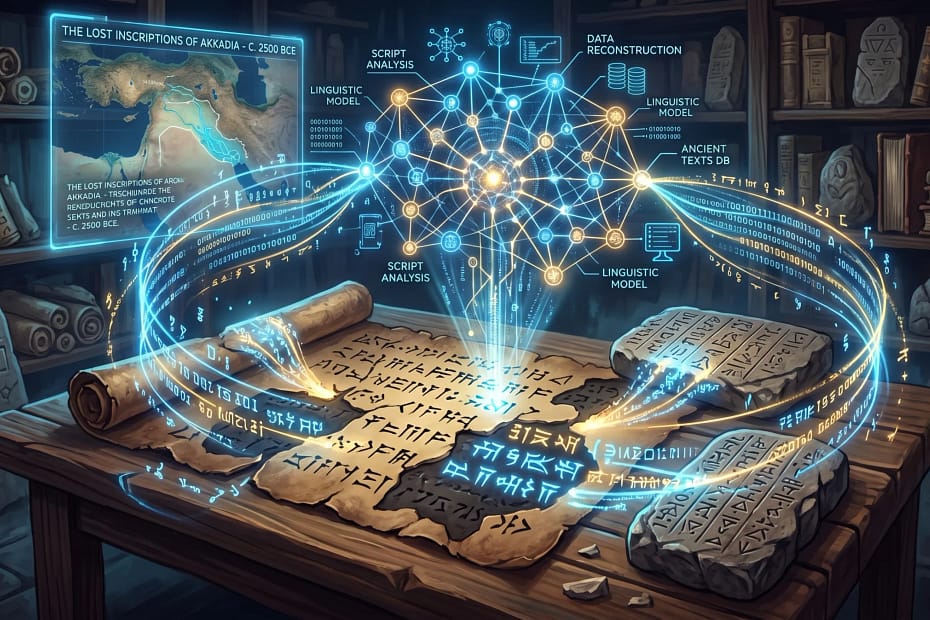
Deep learning—a branch of artificial intelligence—works by teaching computer systems to spot patterns in massive amounts of data, much like our own brains. When it comes to ancient scripts, deep learning shines by working through stacks of scanned texts, picking up handwriting quirks or carving styles, and making smart guesses about what letters or symbols used to be there, even when details are faded or missing entirely.
- Pattern Recognition: Neural networks make out repeating shapes in messy or damaged images, often catching things human experts would miss. This is invaluable when working with ink-smudged scrolls or cracked stones.
- Restoring Lost Characters: When a symbol is missing bits, deep learning models “fill in the blanks” by checking hundreds of examples in context, producing the most likely version.
- Translation Assistance: After a script gets rebuilt, deep learning can also suggest what words might mean by linking up similar languages or related scripts, giving translators a solid starting place.
The biggest boost comes when human experts and AI join forces. Teams at Google, MIT, and Oxford have put together systems that read ancient Greek stone carvings and the handwritten, burnt scrolls from Herculaneum. You can check out these breakthroughs on the Google AI Blog.
What’s Involved in Reconstructing a Script?
Digging into just how deep learning solves this problem reveals some interesting steps:
- Digitization: The first step is making top-quality scans or photos of ancient writings. If the image is blurry or dark, the AI struggles to do its job.
- Preprocessing: Cleaning up images—removing stains, sharpening contrast, straightening lines—so scripts stand out clearly for the AI to analyze.
- Segmentation: Deep learning tools break the picture into sections—cutting out individual symbols or words to make them manageable.
- Recognition: AI then spots and labels symbols, fixing faded or broken letters using what it’s learned about the script’s rules.
- Validation: Finally, real experts check the machine’s guesses against known examples, making tweaks as needed. This teamwork is vital for accuracy.
What’s especially exciting is how the process doesn’t stop after script reconstruction. Community members and learners get involved too. They review, adapt, and use the newscript for daily activities and classroom work. Some projects, like those focused on Mayan glyphs or Siberian scripts, put their data and code online for others to learn from (Zenodo is a great spot for this).
Get Started with Deep Learning Script Restoration
Getting into deep learning-powered script restoration can seem futuristic, but it’s more accessible than many expect. Here’s how you can jump in:
- Start Small: If you’ve got sample symbols or an alphabet, you can build an image recognition deep learning model with open-source tools like TensorFlow or PyTorch. Loads of step-by-step guides exist online to walk you through the process!
- Collaboration: Get in touch with linguistics departments, cultural groups, or online communities. Pooling knowledge and sharing findings speeds up progress for everyone. Sometimes, digital archives exist and just need a little more attention.
- Cloud Computing: Training deep learning networks needs muscle, especially for big datasets. Services like Google Colab and Kaggle offer free resources so you can train models on your own laptop.
Even without coding chops, more and more web-based apps let people upload images and instantly see computer predictions for missing or fuzzy script elements. One example is Recogito, which helps anyone annotate and correct scripts together.
Common Challenges in Script Reconstruction
Perfecting deep learning for mysterious scripts isn’t always easy. Here are a few of the hurdles and ideas for working around them:
- Poor Quality Manuscripts: Parchment riddled with holes, ink that’s faded for centuries, or ancient stones battered by weather can stump both humans and computers. Trying different scanning modes or lighting setups can reveal hidden details.
- Limited Data: Some scripts may only survive in a handful of scraps. Boosting your data by flipping, rotating, or changing the images helps “teach” the AI what shapes to expect.
- Mixed Scripts: Often, ancient texts use more than one system—like blending Arabic and Berber, or classic and everyday Egyptian scripts. Training AI to spot and handle script switches is crucial for accuracy.
Keeping Human Input Central
The best results always come from teams where linguists, native speakers, and artists join AI developers. Oral histories, traditions, and even music lyrics offer clues AI alone won’t notice. It’s about harmony; trust the tech, but always lean on the human touch too.
Advanced Tips for Deep Learning Script Projects
If you’re ready to take your project up a notch, there are several ways to make your script work even better:
1. Transfer Learning: Skip training from scratch! With transfer learning, you can start from models built on similar scripts (such as Sanskrit-based languages), saving time and reducing sample size needs.
2. Ensemble Methods: Combining a handful of different deep learning models usually gets better results than relying on one alone. This is key when symbols look alike or interpretations vary.
3. Community Validation: Online portals or apps where anyone can review AI results help flag errors faster and build community pride. Crowd-checked answers can even become training material for future work.
Applications? HowScript Reconstruction Boosts Real Lives
When ancient scripts find new life, whole communities can reconnect with their past and carry their culture forward. Here are a few inspiring examples:
- School Curriculum: Indigenous schools teach reading and writing in restored scripts, making cultural education more real and exciting for kids.
- Digital Archives: Libraries and universities upload newly readable texts and inscriptions, letting researchers and the public explore them like never before.
- Art and Media: Scripts pop up in visual art, films, or public signs, making endangered languages eye-catching in everyday settings.

Frequently Asked Questions
People have a lot of questions about script projects. Here are some common ones with answers:
Q: Can anyone try deep learning for script restoration, or is it just for experts?
A: Anyone with curiosity and a bit of patience can try—it helps to know some coding, but there’s plenty of support through tutorials and community platforms. The best results come when you team up with people who know the language well.
Q: What if the restored script still isn’t complete?
A: Don’t stress if it’s got gaps at first. Regular AI updates and expert reviews fill in the blanks over time. Community involvement in reviewing and correcting is a huge part of the solution.
Q: How good are deep learning models with the rarest scripts?
A: The right answer depends on your sample sizes and text quality. Even with tough cases, deep learning can improve predictions, especially when experts and language keepers add their opinions and corrections.
Bringing Ancient Scripts and Endangered Languages Back to Life
Deep learning is opening new doors for language and script revival. With the right tools and teamwork, scripts that were unreadable for generations can now be pieced together, giving endangered languages fresh chances in modern life. Watching people read, learn, and create new things in a revived script brings the whole project full circle. If you’re curious about historical languages or eager to be part of something meaningful, this is an adventure worth joining!
The connector GPT
Your Personal Web of Ideas – Link what you think. The Connector maps the hidden threads between your ideas, past content, projects, and patterns. It links what you think, so you can think beyond.
Website hosted by WA,
Human touch by Samburu & Fleeky
powered with AI tools
like niche, images, content & keyword search.
Thank you for questions, shares and comments!
Share your thoughts or questions in the comments below!