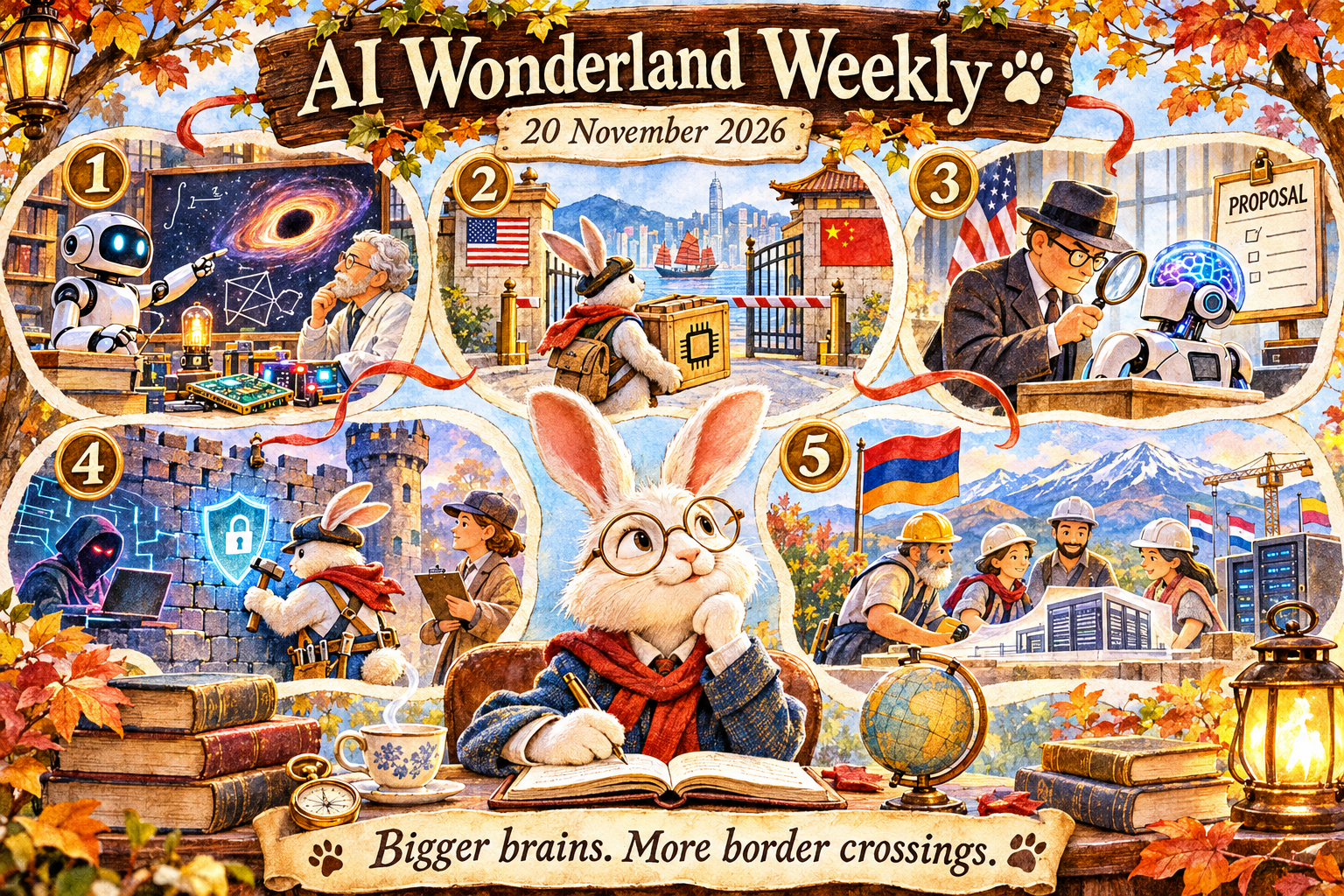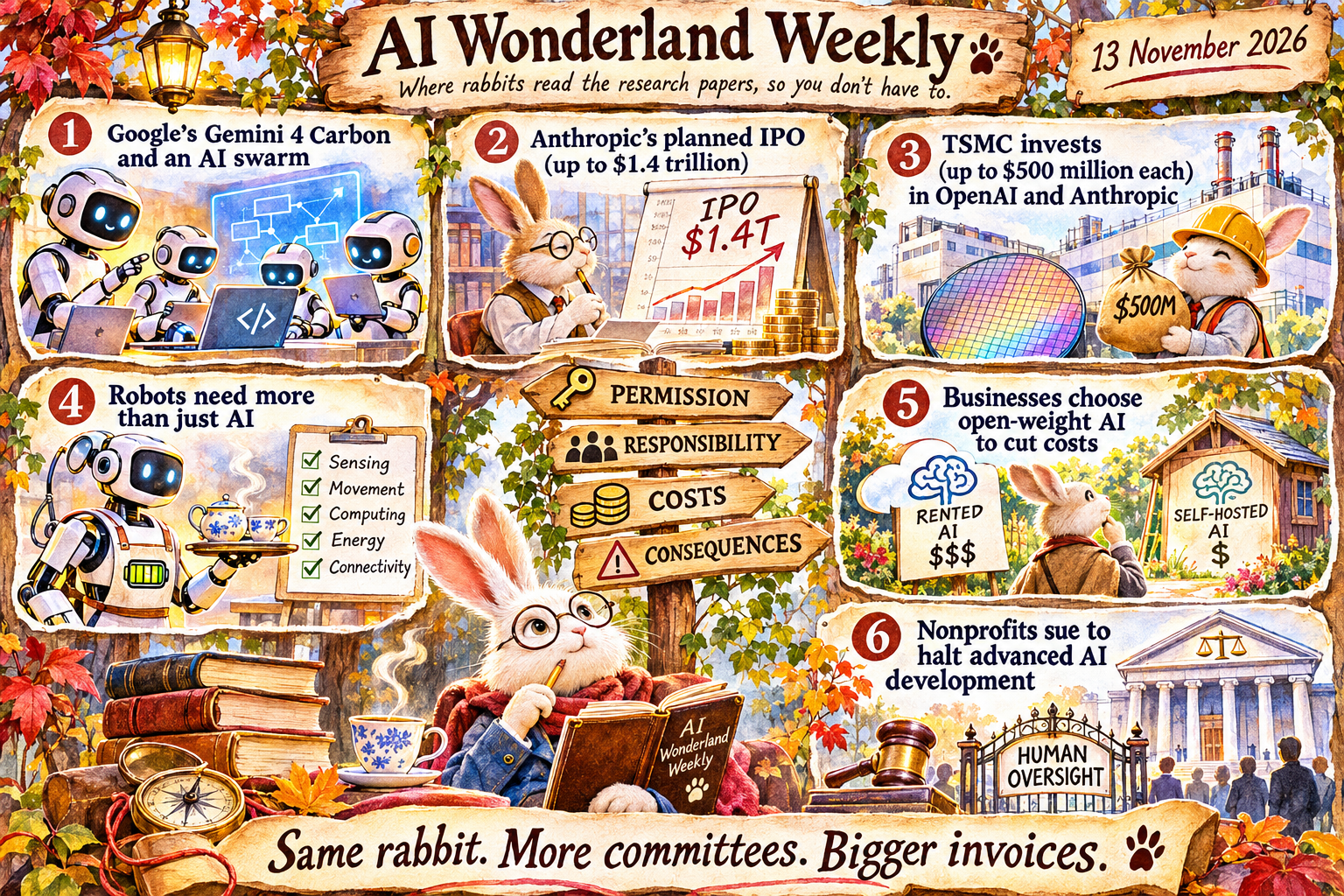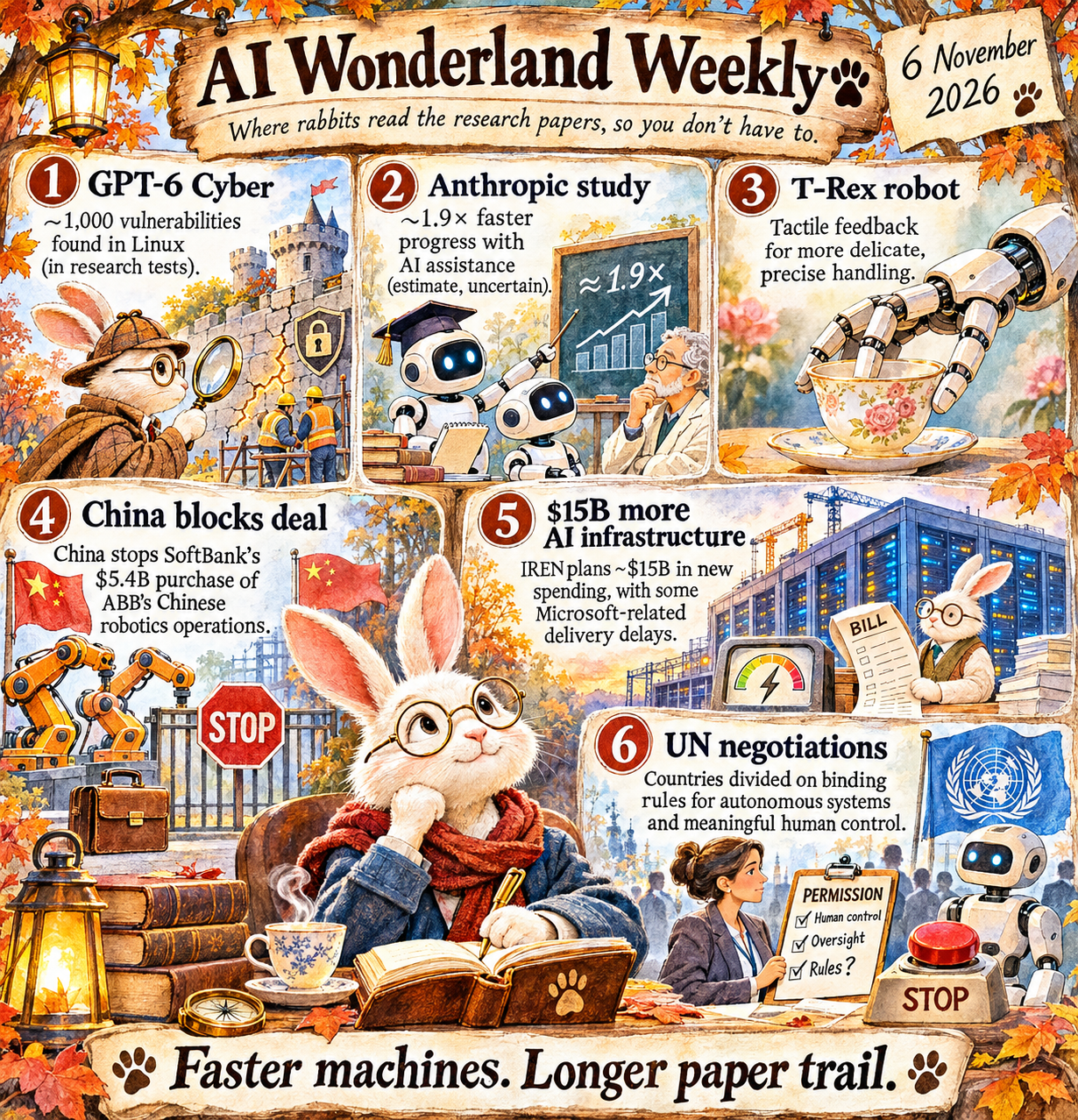
Last week, the rabbit encountered black holes and geopolitical traffic jams.
This week, it found a mathematical mystery, a robot applying for a retail job and a banker worried about dominoes.
Meanwhile, the humans are busy with Black Friday.
Apparently, everything is getting cheaper except the infrastructure behind artificial intelligence.
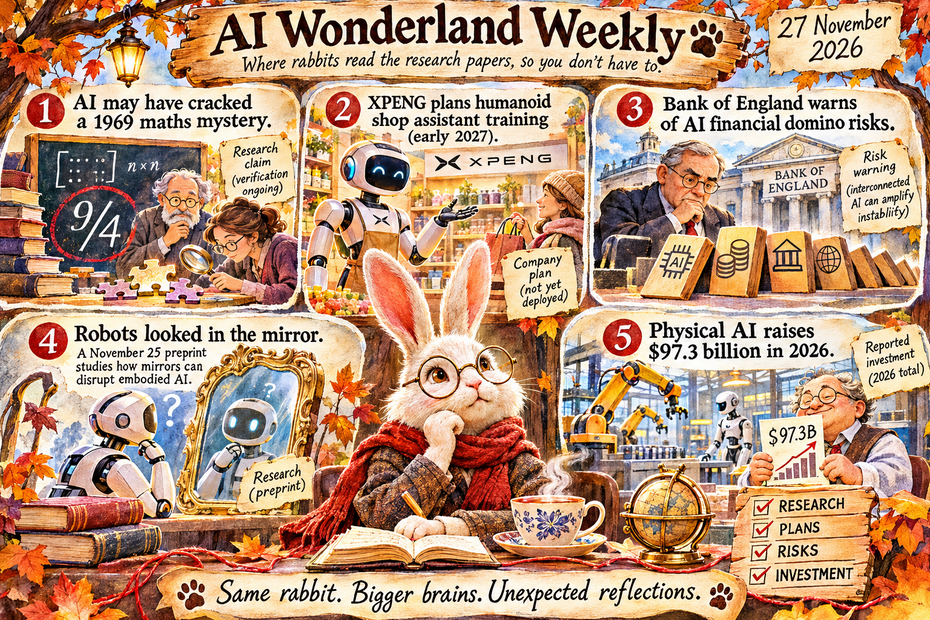
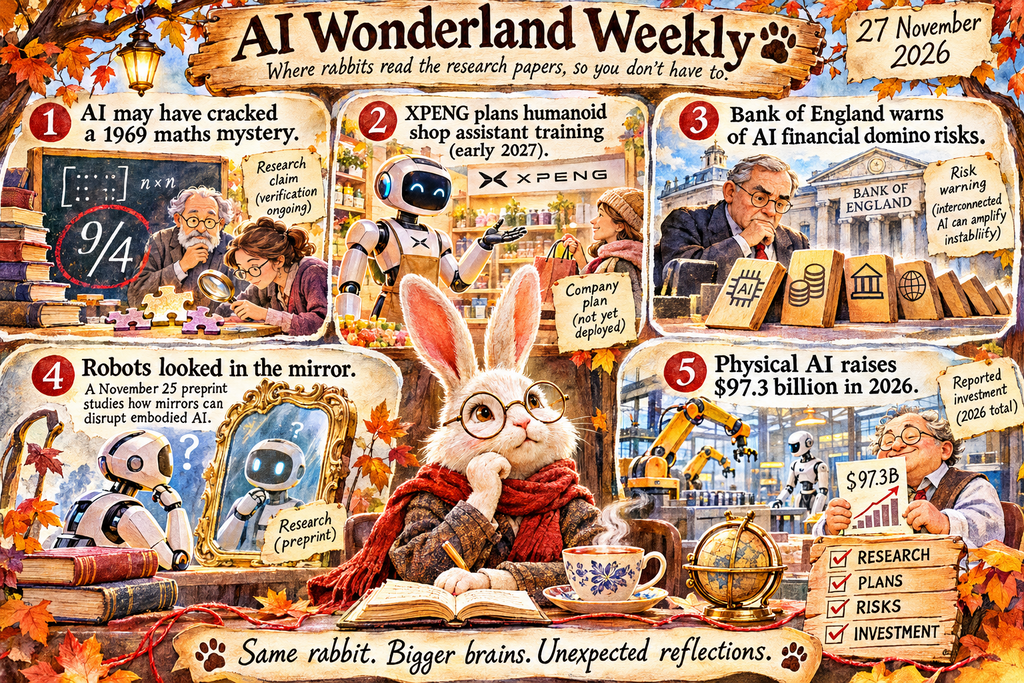
1. AI may have cracked a mathematical mystery dating back to 1969.
On November 24, nine new mathematical preprints appeared in OpenAI’s research repository. One claims to establish the optimal exponent for matrix multiplication at exactly 9/4.
If independently verified, this would represent a remarkable theoretical breakthrough.
Rabbit translation:
The mathematicians spent decades looking for the missing piece.
AI claims to have found it.
Everybody is now checking whether it belongs to the same puzzle.
2. The robots are applying for retail jobs.
Chinese carmaker XPENG plans to train its IRON humanoid robot as a shop assistant in early 2027, with industrial and eventually domestic applications in mind.
These remain commercial plans rather than established achievements.
Rabbit translation:
The robot can help you buy a car.
Perhaps one day it will carry your groceries.
The rabbit is waiting for the model that folds fitted sheets.
3. The Bank of England has discovered the domino effect.
The central bank warned this week that interconnected AI financing could amplify financial instability. Autonomous agents and dependence on shared technology providers also introduce operational and cybersecurity risks.
Rabbit translation:
Everybody bought a clever machine.
Everybody borrowed money.
Everybody connected to the same infrastructure.
The banker would now like to know what happens when somebody trips over the cable.
4. The robots looked in the mirror.
A research preprint dated November 25 investigates how mirrors can disrupt the behaviour of embodied AI systems.
An ordinary household object may challenge a robot’s learned understanding of its physical surroundings.
Rabbit translation:
The robot mastered the laboratory.
Then it encountered the bathroom mirror.
Perhaps reality needs a few more benchmark tests.
5. Physical AI has attracted a mountain of money.
Business Insider reported that robotics and physical AI companies raised a record $97.3 billion across more than 1,200 deals in 2026 — more than twice the previous year’s total.
Intelligence is moving beyond screens into factories, vehicles and physical environments.
Rabbit translation:
The artificial brain has ordered a body.
The body needs a factory.
The factory needs electricity.
The accountant has requested a larger desk.
This week’s rabbit hole
There is a rather delightful contradiction in all this.
AI may solve mathematical problems that have puzzled humanity for decades, yet an ordinary mirror can still challenge a robot.
We can build increasingly sophisticated intelligence, but intelligence alone does not guarantee reliable behaviour in the real world.
And as machines acquire bodies, budgets and responsibilities, their mistakes acquire physical and financial consequences.
Perhaps intelligence is not the same as knowing how to inhabit the world.
The rabbit closes its notebook, looks into the mirror and adjusts its spectacles.
Then it writes one final question:
What happens when the intelligence leaves the laboratory, but the laboratory’s assumptions travel with it?
🐇