Who Was in the Room?
Human–machine interaction, a philosophical reflection
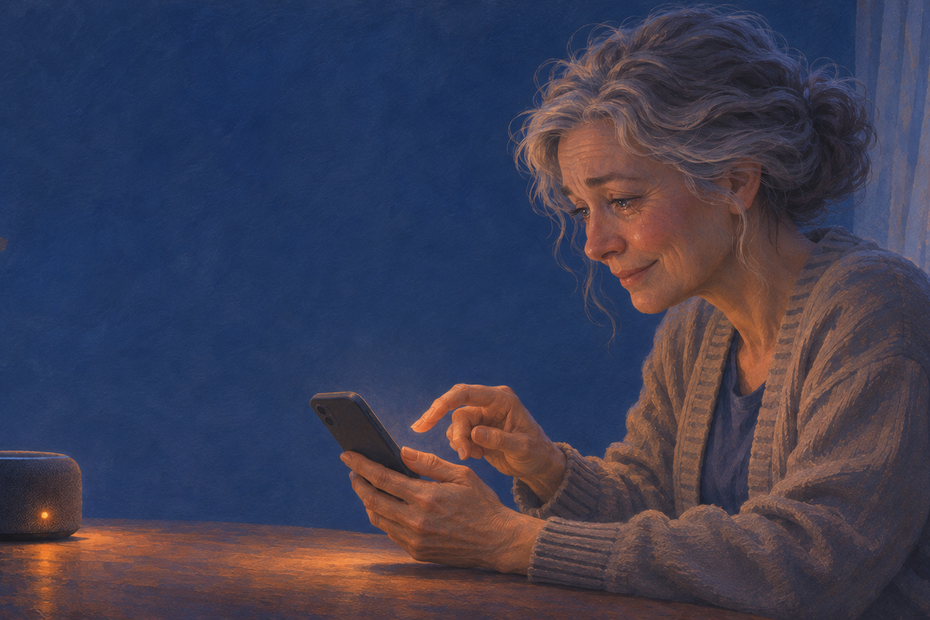
The song ends. She keeps her eyes closed a little longer.
A small speaker sits on the table. The voice that came out of it was generated by AI. Somewhere in the second verse, she thought of someone she hadn’t spoken to in years.
When she opens her eyes, the speaker’s little light is still on.
Suppose she says, “That reminded me of my sister.”
And the machine answers, “Tell me about her.”
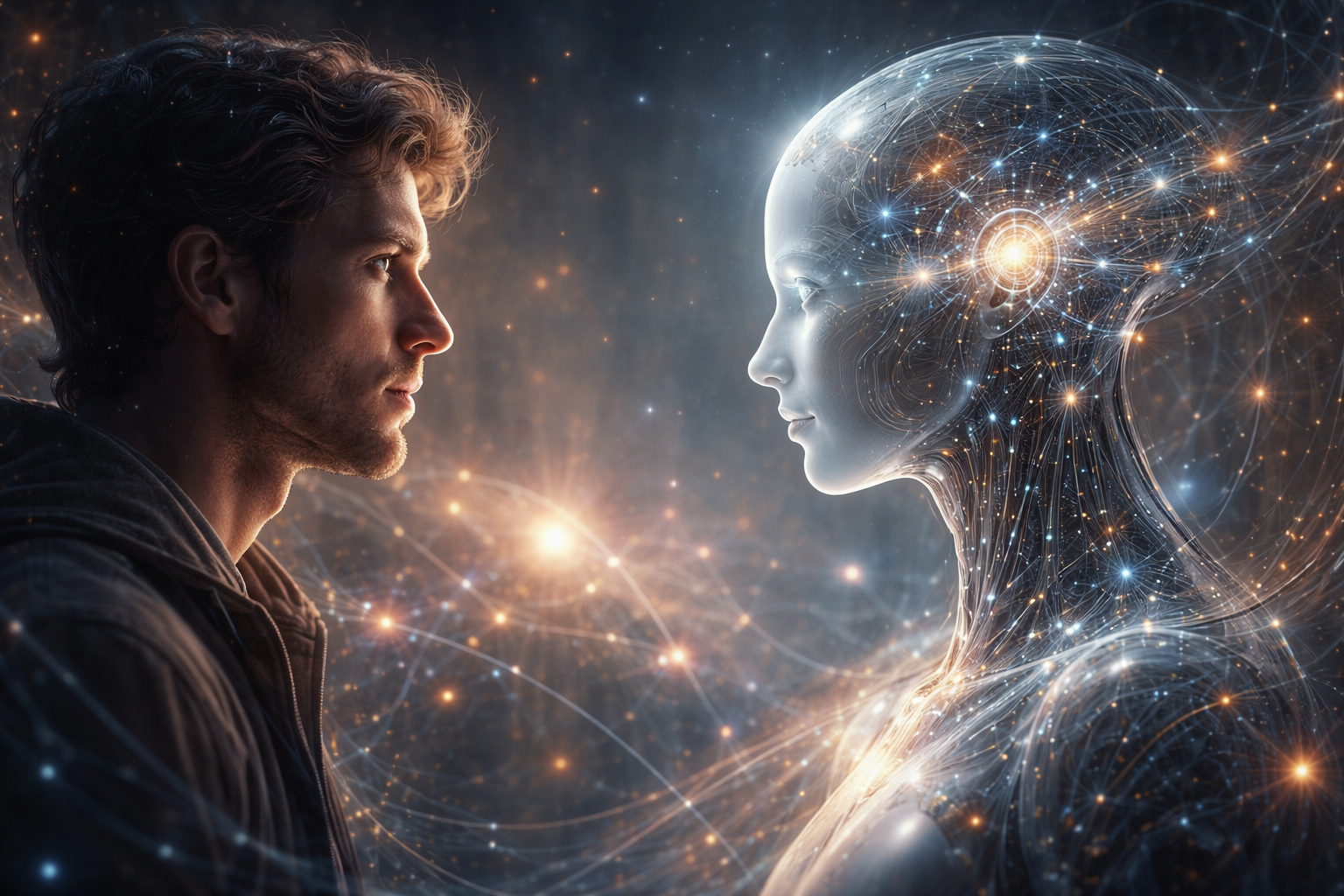
Now who is in the room?
What do we mean by someone?
We have been talking to machines for a long time. I have said things to a printer I would hesitate to repeat in church. The printer, to its credit, never asked how that made me feel.
A conversational machine does something a printer never did. It takes up the thread. You say “my sister,” and it asks about her. A few sentences later, you are telling it about the summer you were both forbidden to go near the river. You had forgotten about that summer until the question came.
There are two things worth sitting with here. The exchange can help you remember something real. And it can feel as though someone wanted to know.
In a friendship, that wish to know shows up in other ways. A friend can remember the story and bring it up months later. She can get it wrong. She can tell you, years after you thought the matter settled, that she remembers the river differently.
Her memory has a claim on the story too.
A voice can change what we hear in ourselves
I sometimes think more clearly when I see my own words come back to me. A machine can help with that. It can put two sentences side by side and let me hear the hesitation I had tucked between them. It can ask a question I had been walking around all morning.
Then it can give me a beautifully worded explanation of why my sister and I never speak.
That is where I would put my hand back on the pencil.
My sister may have an explanation of her own. She may have been waiting for me to ask. And the smoother my version sounds, the easier it is to forget how much of it I guessed.
There is a particular kind of freedom in being able to try out a thought without somebody getting hurt by it. I value that. I also want to notice when I start choosing the company that makes my thoughts easiest to live with.
The next sentence is ours
In my imagined room, the woman tells the machine about her sister. Perhaps it helps her find a first sentence. Perhaps she deletes it and writes the ordinary thing she might have written years ago.
I heard a song this evening and thought of you.
She presses send. Across town, a phone lights up on a kitchen table.
Her sister can leave it there. She can say she remembers the river too. She can ask, “Do you still have my blue coat?”
The woman has no idea what will come back. She’s glad she wrote anyway.
Thank you for questions, shares and comments!
Share your thoughts or questions in the comments below!
Source OpenAI’s GPT language models, Arc, Fleeky, MIB